Rain is not just an inconvenience on Oregon roads. It is one of the most consistent threats to your braking system, and most drivers do not realize how much wet pavement changes the game until it is too late. If you live in Springfield, OR, or anywhere in Lane County, you already know that rainy weather is not a seasonal visitor. It is a way of life for most of the year.
At Absolute Air & Auto Repair, the team works with local drivers every day on brake repairs tied directly to the kind of driving conditions that wet Oregon roads create. This guide explains exactly how rainy weather affects brake performance, what warning signs to watch for, and why getting your brakes checked before the wet season is not optional. It is common sense.
Why Rainy Weather Affects Brake Performance More Than You Think
Here is something most drivers do not know: your brakes do not stop your car. Your tires do. Your brakes generate the friction that slows your wheels, but it is the grip between your tires and the road that actually brings the vehicle to a stop. When that road is wet, the grip drops. And when the grip drops, your stopping distance goes up.
The Hydroplaning Factor
Hydroplaning happens when a thin layer of water builds up between your tire and the road surface, lifting the tire off the pavement. For a split second, you are no longer in contact with the road at all. When that happens, braking does almost nothing. Your pedal pushes against a system that has no traction to work with.
Even without full hydroplaning, wet roads dramatically reduce the coefficient of friction between your tires and the asphalt. What stops your truck in 150 feet on a dry Springfield street could take 200 feet or more in the rain.
Brake Fade and Wet Rotors
When water contacts hot brake rotors, it can cause a momentary drop in friction. This effect is called brake fade. It typically lasts only a second or two, but at 45 miles per hour, a second is a long way to travel without slowing down. Drivers who pump their brakes lightly in wet conditions to clear water off the rotors are actually doing the right thing. That quick light contact generates heat and evaporates surface moisture faster.
Some drivers instinctively pump their brakes lightly in wet conditions. If you find yourself doing that regularly just to get a normal stopping response, that is a signal your brake system needs professional attention, not a workaround.
What Happens to Your Brake Components in Wet Oregon Conditions
Lane County’s climate is not just rainy in the technical sense. It is persistently wet, which means brake components are dealing with moisture exposure month after month.
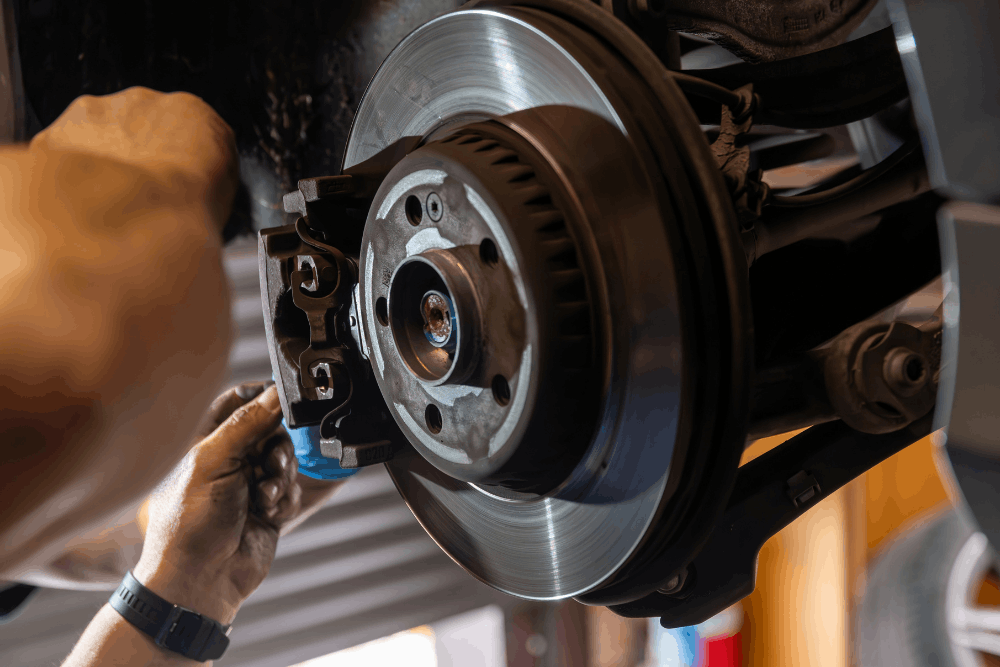
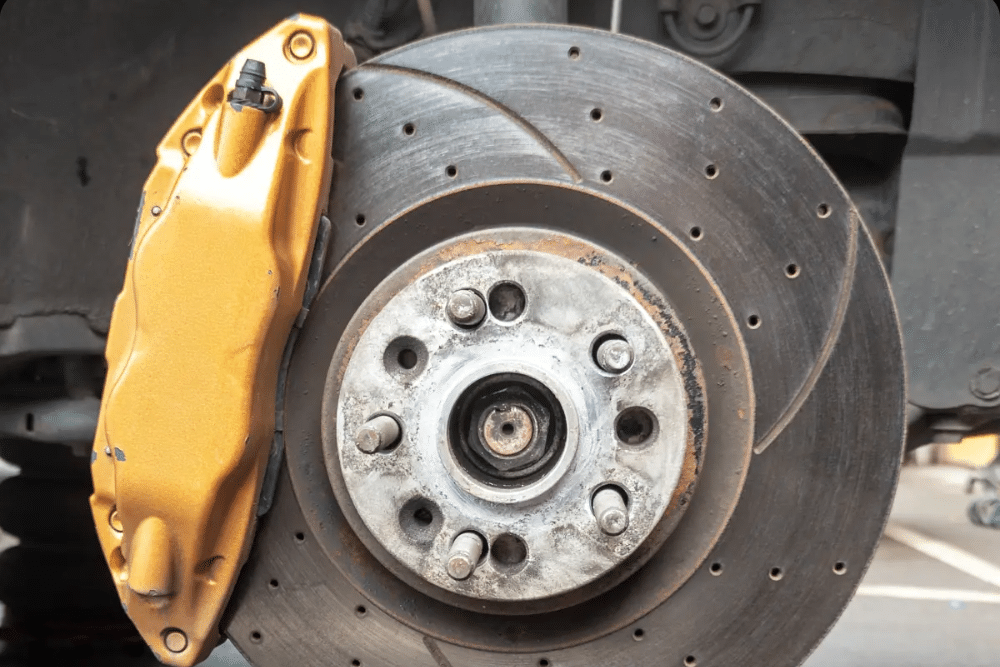
- Rotor surface rust: After a vehicle sits overnight in rain, a thin layer of surface rust can form on the rotors. This is normal and typically clears after a few stops. But if rotors are already grooved, worn thin, or uneven, that rust layer settles into the damage and makes braking rougher and noisier than it should be.
- Brake dust contamination: Rain can wash brake dust and road debris into the caliper slides and hardware. Over time, this builds up and causes calipers to drag or stick, leading to uneven pad wear and pulling to one side when braking.
- Brake fluid and moisture: Brake fluid is hygroscopic. That is a technical way of saying it absorbs moisture from the air over time. As moisture content in the fluid increases, the boiling point drops. In heavy braking situations, fluid with too much water in it can vaporize inside the lines, which causes a spongy or sinking pedal. This is known as vapor lock, and it is a direct safety concern.
- Corroded hardware: In regions with consistent wet exposure, brake hardware like caliper slide pins and shims can corrode and seize. Seized slide pins are one of the leading causes of one-sided brake wear, and they are almost always discovered during a thorough brake inspection.
Warning Signs That Rain Is Exposing a Brake Problem in Eugene, Thurston, and Springfield
Some brake problems only reveal themselves when conditions get tough. Rain is exactly the kind of stressor that makes a borderline brake system show its hand. Watch for these signs the next time it rains:
- Longer stopping distances: You press the pedal at the same point you always do and the car takes longer to stop than it used to.
- Pulling to one side: The vehicle drifts left or right during braking. This often points to a stuck caliper or uneven pad wear.
- Vibration or pulsation: A pulsing sensation through the pedal or steering wheel when braking is frequently a sign of warped or uneven rotors.
- Squealing or grinding: Some surface noise after the car has been sitting in rain is normal for a moment. Noise that persists through multiple stops is not.
- Soft or spongy pedal: If the pedal feels like it travels further than usual before the brakes engage, that is a red flag for moisture-contaminated brake fluid or a brake system issue that needs immediate attention.
Brake Safety Is Not Seasonal in Coburg and Creswell, Either
A common mistake local drivers make is thinking about brake inspections only in the fall as a “rainy season prep” task. The reality is that brakes are a year-round safety system, and the wet weather throughout Lane County means they never really get a break.
If you are driving between Coburg and Springfield on Highway 99, or making the commute between Creswell and Eugene on I-5, you are covering roads that see consistent wet conditions, road spray from trucks, and standing water on the shoulders. These are exactly the conditions that accelerate wear on brake pads, rotors, and hardware.
Getting your brakes inspected at least once a year, and any time you notice a change in how your vehicle stops, is the standard that keeps you and everyone else on the road safe.
Why Absolute Air and Auto Repair Is the Right Call for Brake Service in Springfield, OR
Not every shop takes brake service seriously enough to look past the obvious. At Absolute Air & Auto Repair, brake service goes beyond swapping pads. The team checks the full system, including calipers, rotors, brake fluid condition, hardware, and brake lines, because a brake problem in rainy conditions is rarely just one thing.
A few things that set the shop apart when it comes to brake work:
- ASE-certified team: Absolute Air & Auto Repair’s team includes ASE-certified technicians, trained to the industry standard for diagnosing and repairing brake systems correctly the first time.
- Quality parts and warranty: Every brake job comes backed by up to a 3-year/36,000-mile warranty using high-quality parts that meet or exceed OE standards. That is coverage that outlasts what most dealerships offer.
- Snap financing: Unexpected brake repair does not have to derail your budget. Snap financing is available to help manage the cost.
- Courtesy shuttle service: Drop your vehicle off and get a ride back home or to work while the team handles the repair.
FAQs About Rainy Weather and Brake Performance
Do brakes work differently in rain?
Yes, brakes are less effective on wet roads because water reduces the friction between your tires and the pavement. Stopping distances increase in wet conditions even when your brakes are in good working order, which is why keeping your brake system well-maintained matters year-round.
Where can I get brake repair near me?
If you are in Springfield, Eugene, Thurston, Coburg, Creswell, or anywhere in Lane County, bring your vehicle to Absolute Air & Auto Repair at 214 N 42nd St, Springfield, OR 97478. The team handles everything from pad replacements to full brake system inspections.
Can water damage brake components?
Water exposure can cause surface rust on rotors, corrode brake hardware like caliper slide pins, and increase moisture content in brake fluid over time. Persistent moisture contamination in brake fluid lowers the fluid’s boiling point, which can lead to reduced braking performance and a spongy pedal feel.
How do I know if my brakes are unsafe?
Common warning signs include increased stopping distances, pulling to one side while braking, vibration or pulsation through the pedal, persistent squealing or grinding, and a soft or spongy pedal feel. Any of these symptoms, especially in wet driving conditions, should be evaluated by Absolute Air & Auto Repair as soon as possible.
Should brakes be checked before rainy season?
Yes, and ideally at least once a year regardless of season. In Lane County, where wet conditions persist for much of the year, having your brakes inspected regularly ensures that worn pads, corroded hardware, and degraded brake fluid are caught before they create a safety problem on slick roads.
Schedule Your Brake Inspection in Springfield, OR Today
Wet roads do not give you extra time to react. Your brakes need to be ready to perform the moment you need them, not after a few pumps to clear the moisture.
Bring your vehicle to Absolute Air & Auto Repair at 214 N 42nd St, Springfield, OR 97478 and let the ASE-certified team take a thorough look at your brake system. Call or text 541-726-7766 to schedule your appointment.
Proudly serving Springfield, Eugene, Thurston, Walterville, Coburg, Creswell, Vida, Junction City, Veneta, and the surrounding Lane County area. Rainy weather affects brake performance here more than most drivers realize. Make sure your brakes are ready for it.